The Language Barrier That Costs Millions
When River Plate midfielder Enzo Fernández was courted by three MLS clubs in early 2026, the deals collapsed not because of money, but because of miscommunication. The 25-year-old Argentine's family couldn't understand the contract terms being explained by English-speaking agents, and cultural nuances around family relocation were lost in translation. Six months later, Fernández signed with Inter Miami — represented by Sofia Morales, a bilingual agent whose parents emigrated from Buenos Aires to Los Angeles in the 1990s.
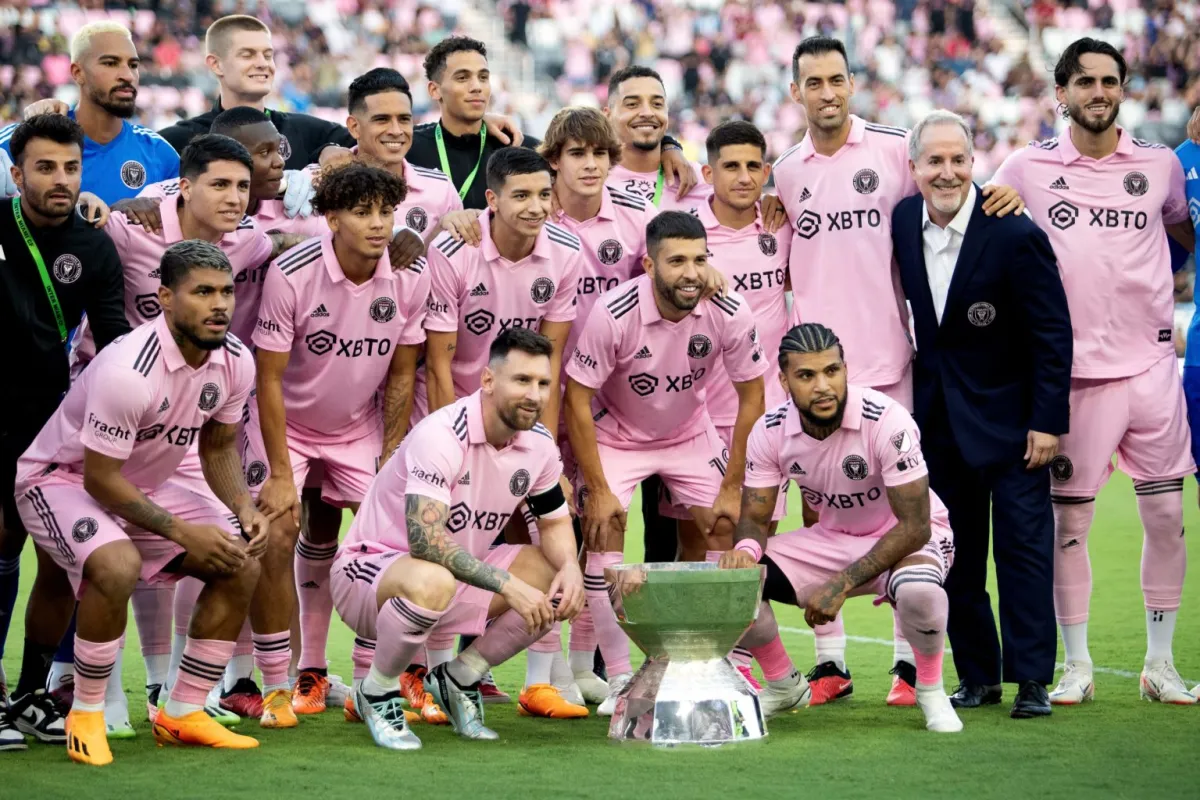 Photo: Inter Miami, via cdn1.intermiami.news
This scenario is playing out across Major League Soccer as a new wave of bicultural sports representatives transforms how American clubs recruit South American superstars. These agents — many of them first-generation Americans with deep roots in Latin America — are leveraging linguistic fluency and cultural understanding to broker deals that traditional European agencies simply cannot close.
The Cultural Trust Gap
For decades, MLS clubs struggled to sign marquee South American talent despite offering competitive packages. The issue wasn't always financial. According to industry insiders, language barriers and cultural mistrust killed more high-profile transfers than salary cap restrictions.
"South American players and their families need to feel understood, not just heard," explains Carlos Mendoza, a Miami-based agent who has facilitated over $50 million in MLS transfers since 2024. "When an agent speaks perfect Spanish and understands the cultural importance of extended family involvement in career decisions, it changes everything."
Mendoza, whose family moved from Colombia when he was eight, represents a growing cohort of bicultural dealmakers. These agents understand that signing a South American star often means convincing not just the player, but parents, siblings, and sometimes entire extended families who view career moves through a different lens than their European counterparts.
Breaking Down the Old Guard
Traditionally, South American players seeking moves to top leagues worked with European-based agents who had connections in England, Spain, or Italy. These representatives often viewed MLS as a retirement league or stepping stone, not a destination worthy of serious consideration.
The new generation of bilingual agents is flipping this narrative. They're positioning MLS as an ideal cultural fit for Latin American players who want competitive soccer without sacrificing family proximity or Spanish-speaking communities.
"European agents sell prestige," says Maria Rodriguez, who represents several Colombian internationals in MLS. "We sell lifestyle and opportunity. When I explain to a player's mother that her son can live in a city with 40% Latino population where she can visit and feel comfortable, that's not something a London-based agent can offer."
The Numbers Don't Lie
The impact is measurable. In 2024, MLS clubs signed 23 South American players aged 24-28 — the prime demographic that typically chooses European leagues. In 2025, that number jumped to 37. Early 2026 data suggests the trend is accelerating, with 19 such signings already completed before the summer window officially opens.
More telling is the profile of these players. Rather than aging stars seeking final paydays, MLS is now attracting South Americans in their prime who view the league as a strategic career move.
Take FC Cincinnati's recent signing of Brazilian midfielder Gabriel Santos, 26, from São Paulo. Santos turned down offers from Serie A and the Bundesliga to join MLS, citing family considerations and the growing competitiveness of American soccer. His agent, Ricardo Delgado, spent weeks with Santos's family in Brazil, explaining everything from American healthcare systems to Ohio's Brazilian community.
 Photo: FC Cincinnati, via mir-s3-cdn-cf.behance.net
The European Response
Traditional European agencies are taking notice. Several major firms have quietly hired bilingual agents or partnered with Latin American representatives to avoid losing clients to MLS.
"The market has changed," admits a senior partner at a prominent London-based agency, speaking on condition of anonymity. "We used to assume South American players would always prefer Europe. That assumption is costing us deals."
Some European clubs are also adapting. Manchester City recently hired a Spanish-speaking liaison specifically to help with South American transfers, while Chelsea has expanded its scouting network to include cultural advisors.
Beyond Language: Understanding Family Dynamics
The bilingual agent advantage extends beyond translation. These representatives understand the cultural importance of family input in South American career decisions.
"In Europe, agents typically negotiate with the player and maybe his immediate family," explains Morales, who has closed deals for players moving to Atlanta United, LAFC, and Inter Miami. "In Latin America, you might be presenting to grandparents, cousins, childhood coaches — anyone whose opinion the player values. You need cultural fluency to navigate those conversations."
This approach has led to some surprising success stories. When Paraguayan striker Miguel Almirón returned to MLS with Charlotte FC in 2025, his agent credited the club's willingness to involve his extended family in relocation planning as the deciding factor.
 Photo: Charlotte FC, via s3-prod.adage.com
The Ripple Effect
The success of bilingual agents is creating a ripple effect throughout the transfer ecosystem. MLS clubs are investing more in cultural competency training for front office staff. Some teams have hired full-time Spanish-speaking liaisons to help with player integration.
The league office has also taken notice. MLS recently launched a partnership with Latin American media companies to improve coverage of the league in South American markets, recognizing that player recruitment and fan engagement are interconnected.
Looking Ahead: The 2026 World Cup Factor
With the 2026 World Cup set to be hosted across the United States, Mexico, and Canada, the cultural bridge-building work of bilingual agents could prove even more valuable. South American players increasingly view MLS as preparation for competing on home soil in the world's biggest tournament.
"The World Cup changes everything," says Mendoza. "Players want to be in North America, training in World Cup venues, building chemistry with teammates who might face them in 2026. That's a narrative only agents who understand both cultures can effectively sell."
The Bottom Line
The rise of bilingual agents represents more than just a staffing trend — it's a fundamental shift in how MLS positions itself globally. By leveraging cultural understanding alongside linguistic skills, these representatives are helping American soccer compete for talent that was previously off-limits.
For MLS clubs willing to embrace this new approach, the payoff extends beyond individual signings to long-term credibility in South American markets. As the league continues to evolve, the agents who can navigate both languages and cultures may prove to be its most valuable assets in the global transfer market.
The question isn't whether this trend will continue, but how quickly traditional agencies will adapt to a market where cultural fluency has become as important as negotiating skill.