The Insurance Policy Transfer: Why Clubs Are Quietly Signing Backup Stars Nobody Talks About — Until Everything Falls Apart
In the summer of 2025, while the soccer world obsessed over Manchester City's $120 million pursuit of Erling Haaland's replacement, the club quietly signed 29-year-old Portuguese midfielder Bruno Fernandes from Sporting for $15 million. The move barely registered in transfer headlines, overshadowed by more glamorous deals across Europe.
 Photo: Manchester City, via thumbs.dreamstime.com
Twelve months later, when Kevin De Bruyne suffered a season-ending injury in October, Fernandes seamlessly stepped into City's starting XI and helped deliver their fourth consecutive Premier League title. The signing that nobody talked about became the transfer that saved their season.
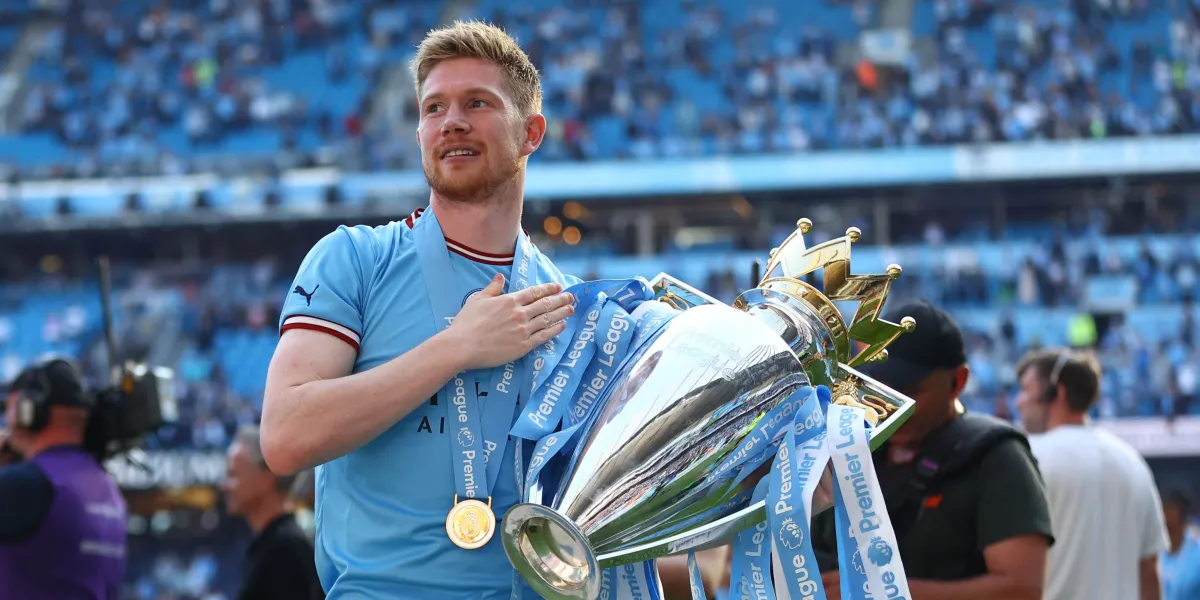 Photo: Kevin De Bruyne, via static0.givemesportimages.com
This is the understated art of the insurance policy transfer — the unglamorous but strategically vital moves that separate championship clubs from also-rans, yet remain invisible to casual observers fixated on marquee signings.
The Hidden Architecture of Success
American sports fans understand depth better than most. NFL teams carry 53 players precisely because injuries and form fluctuations are inevitable. Yet in soccer, supporters and media consistently undervalue the crucial role of squad depth, focusing instead on starting XI upgrades that generate social media buzz.
"Every championship team has three or four players who never get credit but absolutely save the season," explains Michael Edwards, former Liverpool sporting director who perfected the art of strategic depth signings. "These are players good enough to start for most clubs but willing to accept rotation roles for the right situation."
The best insurance policy transfers share several characteristics: proven experience at high levels, tactical flexibility to cover multiple positions, and the mental strength to perform when unexpectedly thrust into crucial situations. They're typically players in their late twenties who've moved past ego-driven career decisions and understand their value as reliable professionals.
Case Study: The Unsung Heroes of 2026
Several under-the-radar signings from the 2026 transfer window exemplify this strategic approach:
Thiago Silva to Chelsea (Free Transfer): At 42, the Brazilian center-back was dismissed as a nostalgia signing. When injuries decimated Chelsea's defense in March, Silva's leadership and experience anchored their run to Champions League qualification. His presence allowed younger defenders to develop without pressure, creating long-term value far exceeding his modest wages.
 Photo: Thiago Silva, via wallpapercave.com
Georginio Wijnaldum to Newcastle ($8 million): The Dutch midfielder's move from PSG generated minimal excitement among Newcastle supporters demanding bigger names. However, Wijnaldum's versatility — capable of playing defensive midfield, attacking midfield, or wide positions — provided crucial tactical flexibility when injuries struck multiple positions simultaneously.
Sebastián Coates to Wolves ($12 million): The Uruguayan defender's signing was overshadowed by Wolves' pursuit of higher-profile targets. When their first-choice center-backs struggled with form and fitness, Coates' Premier League experience and aerial dominance became invaluable, helping Wolves avoid relegation battles.
These signings share a common thread: they addressed specific tactical needs while providing insurance against predictable problems. Smart clubs identify these gaps before they become crises.
The American Blind Spot
US soccer fans, influenced by American sports culture's emphasis on star power, often struggle to appreciate the subtleties of squad building. The NFL's salary cap creates natural limits on star accumulation, forcing teams to find value in role players. Soccer's more fluid financial structure allows clubs to pursue marquee signings, but the best organizations still prioritize balanced squad construction.
"American fans want to see their clubs sign the biggest names possible," notes ESPN soccer analyst Taylor Twellman. "But championships are won by teams that can handle adversity. You need players who can step up when your stars get hurt or lose form."
This blind spot extends to transfer coverage. American soccer media dedicates extensive coverage to Designated Player signings in MLS while barely mentioning the depth additions that often prove more valuable over a full season.
Consider LAFC's 2025 championship run. While Giorgio Chiellini garnered headlines as a marquee signing, it was backup midfielder José Cifuentes — acquired for $2 million from NYCFC — who scored crucial goals during Carlos Vela's injury absence. Cifuentes' contributions were essential to their success, yet he received fraction of the media attention devoted to higher-profile acquisitions.
The Economics of Smart Depth
Insurance policy transfers represent exceptional value in an increasingly inflated market. While headline signings command fees of $50-100 million, quality depth players can often be acquired for $5-20 million — a fraction of the cost for potentially similar impact.
The financial logic is compelling. A $15 million depth signing who plays 20 games and helps secure Champions League qualification generates far more value than their transfer fee. Meanwhile, a $80 million star who misses half the season through injury provides zero return on investment during their absence.
"The best value in football is often found in players other clubs undervalue," explains Brighton's technical director Dan Ashworth, whose club has mastered the art of strategic depth signings. "We look for players coming off difficult seasons at big clubs, or successful players at smaller clubs ready for a step up. They're hungry to prove themselves and available at reasonable fees."
Identifying Future Insurance Policies
Several factors indicate players who could become valuable insurance policy signings:
Contract Situations: Players entering final years at big clubs often become available at reduced fees. Clubs prefer selling for modest sums rather than losing players for free.
Positional Versatility: Players comfortable in multiple roles provide tactical flexibility that becomes crucial during injury crises. Modern football's tactical complexity makes versatility increasingly valuable.
Age and Experience: Players aged 26-30 often represent the sweet spot — experienced enough to handle pressure but young enough to contribute for several seasons.
Cultural Fit: Players who understand club culture and league demands can integrate quickly when needed. Previous experience in the same league or under the same coach reduces adaptation time.
The Scouting Revolution
Advanced analytics have transformed how clubs identify potential insurance policy signings. Data analysis can reveal players whose statistics suggest higher quality than their current situation reflects.
"We look for players whose underlying numbers suggest they're better than their current role indicates," explains a Premier League scout who requested anonymity. "Maybe they're playing out of position, or in a system that doesn't suit their strengths. These players can often be acquired below their true value."
Metrics like pass completion under pressure, defensive actions per game, and goal-creating actions help identify players whose contributions extend beyond basic statistics. This analytical approach has uncovered numerous bargains that traditional scouting might miss.
The Championship Difference
Historical analysis reveals that championship teams consistently outperform rivals in depth quality. Manchester City's recent dominance stems partly from their ability to maintain performance levels when rotating players. Their "second XI" could compete for European qualification at most clubs.
The 2026 Champions League final between Real Madrid and Manchester City illustrated this principle perfectly. Both teams had suffered significant injuries to key players, but their depth signings — players barely mentioned in pre-season coverage — delivered crucial performances on football's biggest stage.
The Takeaway for American Soccer
As MLS continues developing and American clubs pursue higher ambitions, understanding the value of insurance policy transfers becomes crucial. The league's salary cap structure actually makes depth signings more important, as teams cannot simply outspend problems.
Smart American clubs should study European models while adapting strategies to their unique circumstances. The goal isn't copying transfer approaches but understanding the principles that make depth signings successful.
The lesson is clear: while marquee signings generate excitement and sell jerseys, championships are often decided by players whose names casual fans struggle to pronounce. In football's unforgiving mathematics, the difference between success and failure frequently comes down to who you sign when nobody's paying attention.
The smartest clubs understand this reality and plan accordingly, building rosters capable of handling whatever chaos a long season provides. Because in football, as in life, it's not the plan that matters — it's how you adapt when the plan falls apart.