Faded Glory: Why the Heroes of Past World Cups Are Finding 2026's Transfer Market Brutally Unforgiving
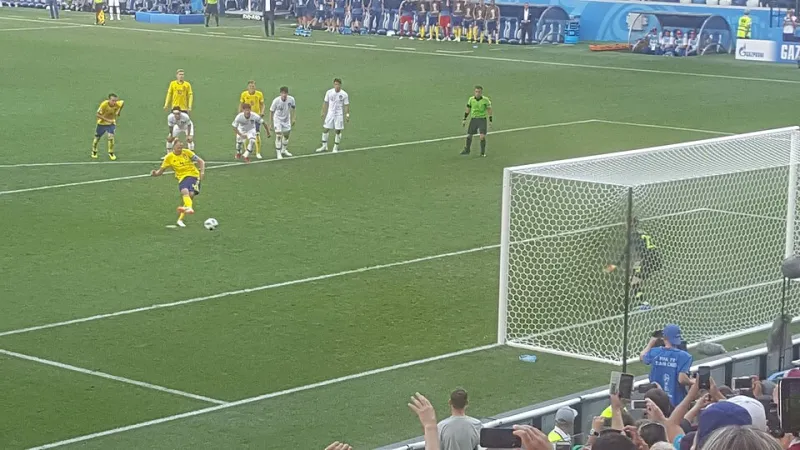
Photo: Ingimar E, CC BY-SA 4.0, via Wikimedia Commons
The World Cup is the greatest shop window in football. Always has been. A single tournament, watched by billions, can transform a functionally anonymous club player into an internationally recognized name overnight. The commercial logic is impeccable: perform on the biggest stage, attract the biggest clubs, command the biggest fees.
Except, increasingly, it does not work that way. And in 2026, with the transfer market operating under a unique set of post-tournament pressures, the gap between World Cup heroics and concrete transfer activity has widened into something approaching a chasm.
The Hype-to-Demand Disconnect
The phenomenon is not entirely new. Every major tournament produces its share of players whose international moment significantly outpaces their underlying club-level profile. What is different in 2026 is the scale of the disconnect, and the specific mechanism driving it.
The 2022 World Cup in Qatar generated a cohort of surprise performers — players from nations that overachieved, individuals who delivered standout moments in high-visibility matches — who entered the subsequent transfer market with inflated valuations attached to their names. Agents, understandably, leveraged the exposure. Asking prices were set accordingly. And for a period, the market appeared to support the logic.
Four years on, the picture is considerably less flattering. Several of those players are now in the curious position of being widely recognized — their highlight reels still circulate on social media, their names still generate engagement — while simultaneously being unable to secure the caliber of club move their reputations might suggest they deserve.
Why the Market Has Moved Against Them
Transfer analysts consulted by Footie Transfer News point to several converging factors.
The first is age. A player who was twenty-six during the 2022 tournament is now thirty in 2026 — precisely the age at which most European clubs begin to discount valuations aggressively. The premium that attached to a strong World Cup performance in 2022 or 2023 has not survived the biological arithmetic. A thirty-year-old with strong international memories is not the same asset as a twenty-six-year-old with a bright future.
The second factor is form continuity. World Cup performances, by their nature, occur in compressed, high-stakes environments that do not always reflect sustained club-level output. Several players who delivered memorable tournament moments have since returned to clubs where their week-to-week performances have been inconsistent, undermined by injury, or simply less visible because the leagues they play in receive limited broadcast coverage in the markets where transfer interest would matter most.
The third — and perhaps most structurally significant — factor is the 2026 World Cup itself. With a new tournament either recently concluded or imminent (depending on the specific timing of a given transfer), clubs are now evaluating a fresh wave of performers. The 2022 generation has been superseded by new hype cycles. Yesterday's breakout star is today's known quantity. And known quantities, in a market that prices novelty as heavily as ability, are less valuable than they once were.
The Overvaluation Problem
The pricing dynamic deserves specific attention, because it illuminates a structural flaw in how the transfer market processes international tournament exposure.
When a player delivers a standout World Cup, their market valuation — as tracked by the major transfer analytics platforms — typically spikes within weeks of the tournament's conclusion. This spike is driven partly by genuine demand signals, but partly by agent positioning and media amplification. The asking price is set at the peak of the hype curve.
What frequently follows is a period of negotiation in which potential buying clubs — who have access to the same underlying performance data — offer significantly less than the asking price. The gap between valuation and offer is not always bridgeable. Deals collapse. The player remains at their current club. Another six months pass. The hype fades. The valuation is quietly revised downward. But by this point, the window of maximum interest has closed, and the clubs that might have moved are focused elsewhere.
For several 2022 World Cup performers, this cycle has now repeated itself multiple times. Each failed negotiation compounds the problem. A player who was a plausible target for a mid-table Premier League side in 2023 may now be looking at offers from leagues that would have been considered a step down at the height of their market value.
Specific Profiles: A Pattern Repeated
Without attributing specific details to any single player — transfer negotiations in progress are inherently sensitive — the profile of a struggling 2022 World Cup transfer case in 2026 follows a recognizable template.
Typically: a player from a nation that reached the knockout rounds unexpectedly, playing in a league outside the traditional European elite, who delivered two or three high-visibility performances during the tournament. Their club valuation doubled or tripled in the months following the tournament. A move to a mid-to-upper tier European club was widely reported but ultimately fell through. They signed a contract extension at their current club — often the only realistic option at the time — which has now complicated any potential departure with a fee structure that the buying market no longer supports.
In 2026, these players are available. The interest, however, is muted. Clubs that might have paid €25 to €30 million in 2023 are now offering €10 to €12 million for the same player. The gap is irreconcilable. The player, their agent, and their club are all holding out for a figure the market will not deliver.
The American Dimension
For US soccer fans following the transfer market, this dynamic carries a particular resonance. Several USMNT players who benefited from World Cup exposure — including the tournament on home soil — are navigating similar pressures. The commercial value attached to playing in the United States, amplified by the 2026 tournament, has created unrealistic baseline expectations in some cases.
MLS clubs, paradoxically, find themselves in a complicated position here. They can afford to sign some of these players at the valuations being discussed. But signing a player because their price has finally dropped to an accessible level is a different proposition from signing them because they represent genuine sporting value at that price point. The distinction matters for roster construction.
What Comes Next
For the players caught in this particular trap, the options are narrowing. Some will accept the reduced valuations and make moves that represent a quiet step down from their peak expectations. Others will run down their contracts and enter the free agent market, sacrificing fee income for the freedom to negotiate wages without a transfer price complicating the conversation.
A small number will find that a strong start to the 2026-27 club season — consistent, high-quality performances in a visible league — resets the narrative sufficiently to reopen doors that currently appear closed. This is the most optimistic scenario, and it is not impossible.
But the broader lesson is one the transfer market teaches periodically, and that agents and players absorb slowly: a tournament is a moment. A career is a body of work. And in 2026, the market is pricing the latter far more rigorously than the former.
Verdict: World Cup hype is a depreciating asset — and the players who banked on it lasting four years are discovering, painfully, that the market has already moved on.