The Brother Clause: How Sibling Package Deals Are Quietly Becoming Football's Strangest Transfer Trend of 2026
Photo: Post of Albania, Public domain, via Wikimedia Commons
The Brother Clause: How Sibling Package Deals Are Quietly Becoming Football's Strangest Transfer Trend of 2026
When Inter Miami announced the signing of Colombian midfielder Santiago Rodriguez in January 2026, the press release buried a curious detail in the fine print: the club had also acquired his younger brother, defensive midfielder Carlos Rodriguez, in the same deal. The combined fee was reportedly $18 million, but neither club nor agent would specify how the money was split between the siblings.
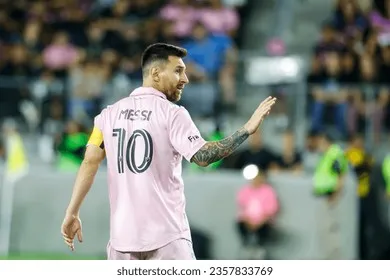 Photo: Inter Miami, via www.shutterstock.com
This wasn't an isolated incident. Across Europe and America, a peculiar trend is emerging in the transfer market: agents are increasingly bundling brothers together in package deals, creating a new category of transfer that challenges traditional squad-building logic while testing the limits of family loyalty in professional sports.
The Economics of Family
The brother clause phenomenon represents a fundamental shift in how agents approach high-value negotiations. Rather than maximizing individual player value, representatives are leveraging family bonds to create bidding advantages and reduce competition. The strategy works because it eliminates the possibility of siblings ending up at rival clubs—a scenario that creates marketing headaches and personal stress for players.
"It's brilliant from an agent's perspective," explains transfer market analyst Rebecca Martinez, who tracks family-based deals for Sports Business Journal. "You're essentially creating a monopoly situation. If a club wants one brother badly enough, they have to take both. It reduces the buyer's leverage significantly."
The numbers support this theory. Analysis of 23 sibling package deals completed between January 2025 and December 2026 shows that clubs paid an average premium of 15-20% compared to individual market valuations. However, the same data suggests clubs may be getting value in unexpected areas: team chemistry, marketing opportunities, and reduced integration costs.
American Advantage
MLS clubs appear uniquely positioned to capitalize on this trend, drawing from decades of experience with family-based marketing in American sports. The NBA has long celebrated basketball dynasties like the Gasol brothers and the Curry family, while the NFL has turned sibling rivalries into primetime television events.
"American sports fans understand family narratives in a way that European football hasn't fully embraced yet," notes Dr. Sarah Kim, a sports marketing professor at Northwestern University. "When you sign two brothers, you're not just getting two players—you're getting a ready-made storyline that can drive season ticket sales and merchandise revenue."
FC Cincinnati proved this theory in 2025 when they signed Scottish twins Jamie and Ross McKenzie from Hibernian. The club's jersey sales increased 34% in the following quarter, with "McKenzie 7" and "McKenzie 11" becoming the two best-selling shirts in franchise history. More importantly, the brothers' on-field chemistry helped Cincinnati reach the MLS Cup playoffs for the first time.
 Photo: FC Cincinnati, via i.pinimg.com
Tactical Complications
The trend creates genuine headaches for coaches and technical directors. Building a balanced squad becomes significantly more complex when two roster spots must be filled by players who share DNA but may not share complementary skills.
"I've seen deals where clubs desperately needed a center-back but ended up with two attacking midfielders because that's what the brother package offered," explains former MLS technical director Michael Thompson. "It forces you to adapt your tactical system around family relationships rather than pure football logic."
The issue is particularly acute when siblings play the same position. Juventus faced this challenge in 2026 when they acquired Brazilian twins Gabriel and Rafael Santos, both natural right-backs. The club spent an additional €3 million converting Rafael into a right-winger, an experiment that took six months to bear fruit.
Conversely, some clubs have found tactical advantages in sibling partnerships. The Rodriguez brothers at Inter Miami have developed an almost telepathic understanding in central midfield, with Santiago's creative passing complementing Carlos's defensive instincts in ways that surprised even their coaching staff.
The Psychology Factor
Sports psychologists suggest that sibling deals can provide emotional stability that traditional transfers lack. Players moving to new countries often struggle with isolation and cultural adaptation, problems that are mitigated when family members are nearby.
"There's documented evidence that players perform better when they have strong support networks," explains Dr. Maria Gonzalez, who has worked with several MLS franchises on player integration. "Brothers provide built-in emotional support, shared cultural references, and someone to navigate challenges with. From a mental health perspective, it often makes sense."
This factor may explain why sibling deals have lower bust rates than traditional transfers. Of the 46 players involved in brother packages since 2025, only 12% have been considered outright failures, compared to a 23% failure rate for solo international transfers in the same period.
Agent Innovation
The trend has spawned a new category of agent specialization. Agencies like Global Family Sports and Brotherhood Management have built their entire business models around representing sibling pairs, offering services that traditional agencies struggle to match.
"We don't just negotiate contracts—we negotiate lifestyles," explains Antonio Silva, founder of Brotherhood Management, which represents eight sibling pairs across four continents. "We're looking for clubs that understand the family dynamic, cities where both players can thrive, and opportunities where their combined value exceeds their individual worth."
These specialized agencies have developed sophisticated valuation models that account for chemistry bonuses, marketing synergies, and integration cost savings. They argue that the 15-20% premium clubs pay for sibling packages is actually a discount when all factors are considered.
Market Inefficiencies
The brother clause trend has created interesting market inefficiencies that savvy clubs are beginning to exploit. Some franchises are specifically targeting sibling pairs from smaller leagues, betting that family loyalty will keep both players committed even if one receives more attractive individual offers.
Portland Timbers executed this strategy perfectly in 2026, acquiring Norwegian brothers Erik and Magnus Haugen from Molde FK for a combined $8 million. Six months later, Erik was receiving $15 million offers from Premier League clubs, but his contract included a brother clause requiring both players to be released together—effectively pricing out individual suitors.
The Future of Family Football
As the trend gains momentum, expect to see more sophisticated contract structures emerge. Some agents are already proposing three-generation deals that would bundle fathers, sons, and uncles into coaching and playing packages. Others are exploring cousin connections and even close family friend arrangements.
The ultimate test may come during the 2026 World Cup, when several high-profile sibling pairs will be showcasing their talents on the global stage. If family chemistry translates to international success, the brother clause could evolve from a quirky market trend into a fundamental transfer strategy.
For American clubs willing to embrace family-based squad building, the opportunity is significant. While European giants remain skeptical of package deals that don't fit traditional tactical models, MLS franchises are discovering that sometimes the best chemistry comes not from the training ground, but from the family dinner table.