Brand Over Ball: How Corporate Stadium Sponsors Are Quietly Killing Transfer Deals at America's European Clubs
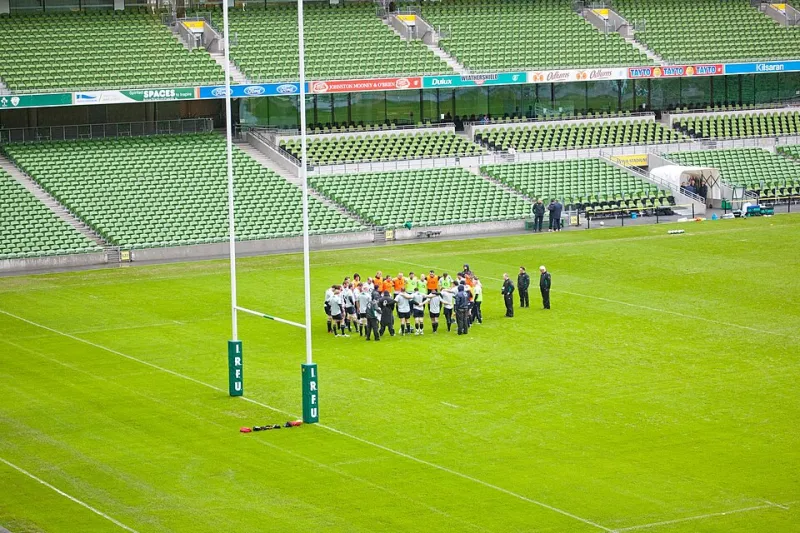
Photo: William Murphy from Dublin, Ireland, CC BY-SA 2.0, via Wikimedia Commons
Brand Over Ball: How Corporate Stadium Sponsors Are Quietly Killing Transfer Deals at America's European Clubs
The call, according to sources familiar with the situation, came not from the manager, not from the sporting director, and not from the club's majority shareholder. It came from the commercial partnerships team. The message, delivered with the careful language of corporate diplomacy, was unambiguous in its practical meaning: the player the club was pursuing had a social media history that the stadium naming rights partner found commercially problematic. The deal, which had been moving toward completion, went quiet. It never happened.
This is not an isolated incident. Across several American-owned European clubs, a pattern is emerging that sits at the uncomfortable intersection of commercial partnership management and football recruitment. Stadium sponsors, kit partners, and major naming rights holders are exercising a form of informal influence over transfer decisions that has no formal mechanism, generates no public record, and is almost never acknowledged by the clubs involved. It is football's newest power behind the throne — and it is doing real damage to real transfers.
How the Mechanism Actually Works
To understand how sponsor influence bleeds into recruitment, you first need to understand how modern naming rights and commercial partnership agreements are structured at American-owned European clubs.
US-based ownership groups have, broadly speaking, brought a more sophisticated commercial architecture to European football than the model they replaced. Where previous ownership structures treated stadium naming rights and kit sponsorships as relatively simple revenue transactions, American operators have integrated these partnerships into broader brand alignment frameworks. Sponsors are not simply buying logo placement. They are buying association with the club's identity, values, and public-facing image.
The contractual language that governs these arrangements increasingly includes provisions around brand safety — clauses that give sponsors recourse if the club's actions, signings, or public associations expose the partner brand to reputational risk. In most cases, these provisions are drafted with obvious scenarios in mind: criminal conduct, serious disciplinary incidents, the kind of behavior that generates headlines no brand wants to be adjacent to.
What has happened in practice is that the definition of brand risk has expanded considerably. A player's social media history. A player's public political statements. A player's associations with competing commercial brands. A player's fanbase demographics, which in some cases are seen as misaligned with a sponsor's target consumer profile. Each of these factors has reportedly been raised in informal conversations between commercial teams and ownership groups at American-owned clubs during the current transfer window.
The Informal Veto in Practice
The mechanism by which sponsor preferences translate into transfer outcomes is almost never a formal veto. No partnership agreement, in the cases examined for this article, appears to grant a naming rights holder the explicit contractual right to block a signing. What happens instead is subtler and, arguably, more corrosive.
Ownership groups at American-owned clubs are acutely conscious of their commercial relationships in a way that traditionally structured European clubs often are not. For a US-based investment group, the naming rights deal and the kit sponsorship are line items in a financial model that was built on the assumption of stable, long-term commercial partnerships. A sponsor that feels its brand safety provisions are being disregarded is a sponsor that may choose not to renew — or that may invoke contractual remedies that create significant financial and legal complexity.
The result is a form of self-censorship in the recruitment process. Commercial teams flag concerns. Ownership groups weigh them. Sporting directors, who are rarely if ever present in these conversations, find that targets they have identified and pursued suddenly encounter resistance from above that is never fully explained. The player does not get signed. The reason given internally is typically vague — "the fit wasn't right" or "the numbers didn't work" — and the commercial dimension of the decision remains invisible.
Sources with direct knowledge of recruitment processes at more than one American-owned Premier League club indicate that this dynamic has affected transfer decisions in the current window. In one case, a forward with a significant public profile and a history of commercially sensitive social media content was removed from a shortlist following conversations between the club's commercial partnerships director and a representative of the stadium naming rights holder. The sporting director involved was reportedly not informed of the specific reason.
 Photo: Premier League, via resources.premierleague.com
Why American Ownership Is Particularly Vulnerable
European clubs with traditional ownership structures — family ownership, supporter trusts, or publicly listed companies with football at their operational core — are not immune to commercial pressure. But the nature of American investment group ownership creates a specific set of vulnerabilities that make this dynamic more pronounced.
First, US-based ownership groups typically operate across multiple business interests simultaneously. The individuals and entities involved in owning a Premier League or Bundesliga club are rarely football specialists. They are investors with diversified portfolios, for whom the reputational and commercial health of the club is one consideration among many. The idea of allowing a transfer to proceed that might create friction with a major commercial partner sits differently for this type of owner than it would for a family that has been associated with a club for generations.
Second, the commercial architecture that American owners have built at their clubs creates leverage points that did not previously exist. By integrating sponsors more deeply into the club's brand identity, they have simultaneously given those sponsors more to protect — and more grounds on which to assert that protection.
Third, and perhaps most significantly, the American business culture that these ownership groups bring with them is one in which commercial partnership management and operational decision-making are understood to be connected. In the NFL or NBA context, the idea that a major sponsor's brand alignment concerns might influence a personnel decision would not be considered extraordinary. Translated into European football, where the independence of sporting decisions from commercial considerations is considered a near-sacred principle, the same logic becomes genuinely controversial.
What This Means for the Future of Transfer Autonomy
The implications here extend beyond individual transfers. If corporate sponsors acquire — formally or informally — meaningful influence over recruitment decisions at major European clubs, the consequences for competitive integrity are significant.
A club whose transfer activity is partly shaped by the brand preferences of a telecommunications company or a financial services firm is not making purely sporting decisions. The players who get signed, and the players who do not, are being filtered through a commercial lens that has nothing to do with tactical fit, squad balance, or competitive need. Over time, that distortion compounds.
Player representatives are beginning to take note. Several agents have reportedly started conducting preliminary due diligence on the commercial partnership structures of target clubs before entering serious transfer negotiations — specifically to assess whether a client's public profile or commercial associations might create friction with a club's major sponsors. In at least one reported instance, a player's team declined to engage with a specific American-owned club on the basis of concerns about exactly this dynamic.
For football's governing bodies, the question of whether sponsor influence over recruitment decisions constitutes an integrity issue has not yet been formally raised. But the conditions for it to become one are already in place.
The Transparency Problem
Perhaps the most troubling aspect of this trend is its invisibility. Transfers that fail for commercial reasons are reported as transfers that failed for sporting or financial reasons. The commercial dimension is never disclosed. Players who are quietly removed from shortlists due to sponsor concerns have no way of knowing why they were passed over. Sporting directors operating under commercial constraints they are not fully briefed on cannot do their jobs with full information.
The clubs involved have every incentive to keep this dynamic opaque. Acknowledging that a signing was blocked by a stadium sponsor would be commercially damaging, reputationally problematic, and potentially legally complex. So it stays quiet. The transfer just doesn't happen, and nobody explains why.
That silence is itself a problem. Football's transfer market functions on imperfect information, but it functions. When a new category of invisible constraint enters the system — one that affects outcomes without being acknowledged or regulated — the market becomes less efficient and less fair in ways that are difficult to diagnose or address.
Verdict: The grandstand veto is real, it is growing, and it represents a genuine threat to the principle that sporting decisions at football clubs should be made on sporting grounds — a principle that American-owned clubs, of all clubs, should be most motivated to protect, given the scrutiny their ownership model already attracts.