Visa Walls and Work Permits: How Immigration Law Is Quietly Deciding Which Post-World Cup Transfers Actually Happen
Photo: DBellamy, CC BY-SA 4.0, via Wikimedia Commons
When a football transfer collapses in the final hours, clubs rarely tell you the real reason. The official statement usually references 'personal terms' or 'medical concerns.' What they almost never admit — and what is becoming an increasingly common reality in the summer of 2026 — is that the deal died in a consulate waiting room, not on a negotiating table.
Immigration law is quietly becoming the most consequential variable in the post-World Cup transfer market. As clubs scramble to secure the tournament's breakout stars, a growing number of moves that are financially sound and athletically logical are being derailed, delayed, or quietly abandoned because of work authorization complexity that few in football's mainstream conversation are willing to address directly.
The Two-Tier Transfer Market Nobody Is Talking About
At the elite end of the market, the biggest clubs have known about this problem for years. Manchester City, Real Madrid, and Bayern Munich all maintain in-house legal teams that include immigration specialists who begin work permit pre-assessments months before a transfer target is publicly identified. These clubs know, before a single bid is submitted, whether a player's nationality, travel history, or prior legal record will complicate the authorization process in the destination country.
 Photo: Bayern Munich, via wallpapercave.com
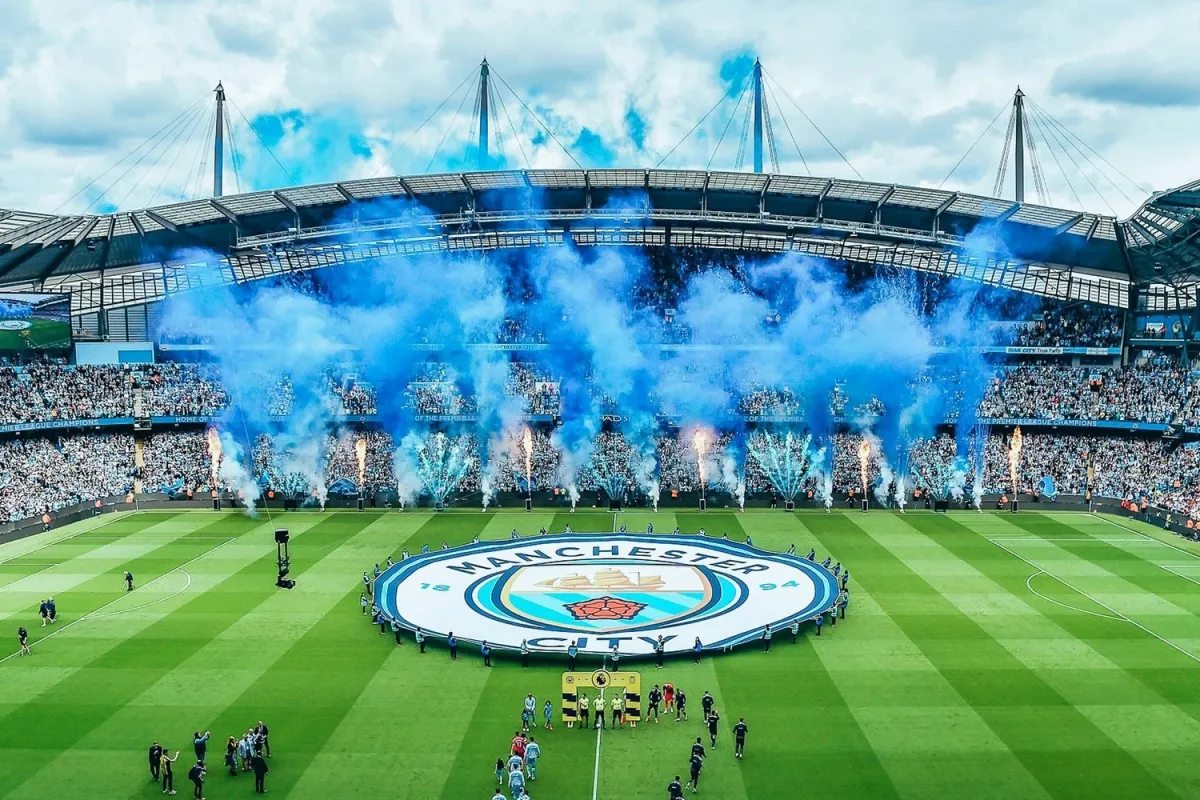 Photo: Manchester City, via frontofficesports.com
Everyone else is catching up — and paying for it.
In the United States specifically, the explosion of MLS ambition following the 2026 World Cup has brought a wave of international transfer activity that American clubs were not fully equipped to process at speed. The O-1B visa category, which covers athletes of extraordinary ability, remains the primary route for non-Canadian, non-Mexican players entering MLS. But 'extraordinary ability' is a legal standard that must be documented, evidenced, and argued before a federal adjudicator — and in a post-tournament window where dozens of clubs are simultaneously filing petitions for newly prominent players, processing timelines are stretching into weeks that buying clubs simply do not have.
Sources within two MLS front offices, speaking on condition of anonymity, confirmed to Footie Transfer News that at least three transfer targets this summer were signed by rival clubs — one in Liga MX, two in the Championship — not because those clubs offered better terms, but because they could guarantee faster regulatory clearance.
When the Player's Past Becomes the Transfer's Problem
Work authorization complexity does not only affect players from nations with restricted travel agreements. It also intersects, in ways that clubs rarely anticipate, with a player's personal legal history.
A minor criminal conviction — a charge that would be considered spent or irrelevant under the laws of the player's home country — can trigger mandatory disclosure requirements under US immigration law that create delays of four to eight weeks even for otherwise straightforward applications. European destinations carry their own complications: the UK's Governing Body Endorsement system, which already imposes strict appearance-threshold requirements, has added additional scrutiny layers in 2026 following post-Brexit regulatory updates.
Clubs that have not done their due diligence before announcing a signing can find themselves in an acutely embarrassing position: a player is medically cleared, a fee is agreed, a squad number is assigned — and then the work permit application surfaces a complication that nobody flagged in advance. In those situations, the 'personal reasons' press release is not spin. It is, in a narrow sense, true. The problem just happens to be a personal legal file sitting in a government database.
The Country-of-Origin Factor
There is a broader structural inequity embedded in this issue that deserves more scrutiny from American fans. Players from nations that maintain strong diplomatic and trade relationships with the United States or major European footballing nations move through immigration systems faster and with fewer documentation requirements than equally talented players from countries with more complex bilateral relationships.
This creates a quiet but real distortion in the transfer market. A technically superior player from a country whose nationals face enhanced visa screening may lose a transfer opportunity to a slightly less accomplished player who can be registered and playing within two weeks. Clubs operating under tight pre-season schedules or mid-window registration deadlines will make pragmatic choices, and those choices are not always made on footballing merit alone.
Several agents operating in the African and Southeast Asian markets have raised this concern with football's governing bodies, arguing that the current system effectively penalizes players for their nationality in ways that have nothing to do with their ability or character. As of the time of publication, neither FIFA nor UEFA has issued formal guidance on the issue.
What American Fans Should Watch For
If your club announces a signing and then goes unusually quiet about the registration timeline, immigration complexity is often the explanation. Specific red flags include: a delay between the official transfer announcement and the player's first training session photograph; a club statement referencing 'administrative procedures' without further detail; or a player who appears on a squad list but is described as 'not yet available for selection' well into pre-season.
None of these situations necessarily mean a deal will collapse. Most work authorization applications, even complicated ones, are eventually resolved. But in a transfer market that moves at the speed of social media, a three-week regulatory delay can mean a player misses the opening fixtures, disrupts tactical preparation, and costs the buying club the momentum that justified the signing in the first place.
The clubs winning the immigration race in 2026 are the ones that treated legal infrastructure as a competitive advantage years before it became an obvious necessity. For everyone else, the visa wall is no longer a theoretical obstacle. It is a transfer deadline of its own — and it does not care about your budget.