The Number Market: How Iconic Squad Digits Are Quietly Being Monetised Inside Football's Transfer Deals
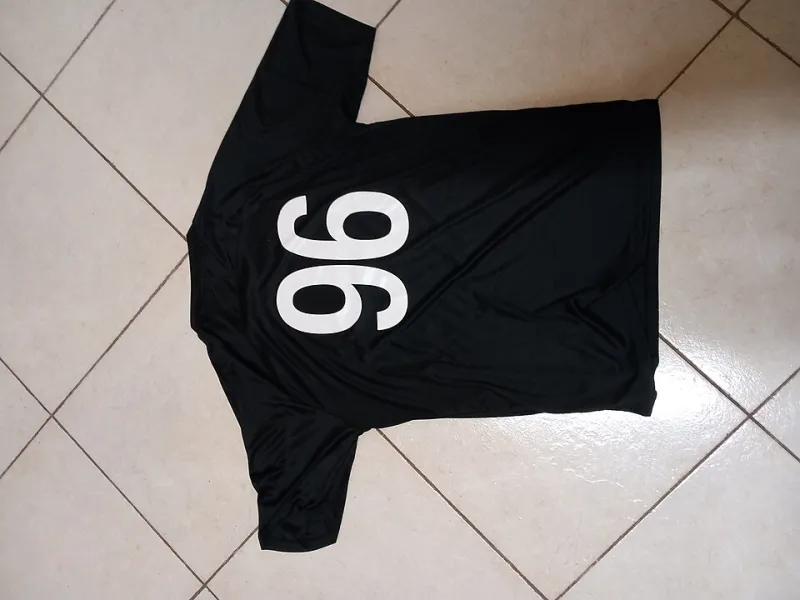
Photo: Dr Salvus, CC BY-SA 4.0, via Wikimedia Commons
The Number Market: How Iconic Squad Digits Are Quietly Being Monetised Inside Football's Transfer Deals
There is a moment in almost every major transfer negotiation — usually late, usually after the headline fee and the wage structure have been broadly agreed — when the conversation turns to the squad number. At most clubs, this is treated as administrative housekeeping, a minor detail to be resolved before the announcement graphic is designed and the unveiling video is filmed. At a growing number of clubs in 2026, however, that conversation has become something considerably more complicated — and considerably more expensive.
Sources across multiple leagues and agencies have described to Footie Transfer News a quiet but accelerating trend: iconic squad numbers — the kind associated with club legends, retired greats, or World Cup-winning heroes — are increasingly being treated as commercial assets with quantifiable financial value. And in some cases, the right to inherit one of those numbers is being bought and sold, indirectly but deliberately, inside the mechanics of a transfer deal.
Beyond Superstition: When a Number Becomes a Brand
The emotional significance of squad numbers in football is well established. The number 10 carries decades of association with playmaking genius. The number 9 evokes the classical center forward. Numbers retired in honor of club legends carry specific weight at specific institutions. None of this is new.
What is new — or at least newly systematized — is the commercial dimension that has attached itself to number inheritance in the post-World Cup era. The 2026 tournament, broadcast to record audiences across the United States and generating extraordinary levels of global engagement, produced a cohort of breakout stars whose shirt numbers became, almost instantly, some of the most commercially recognizable digits in world sport. Replica shirt sales, licensing deals, and social media branding all followed the number as much as the name on the back.
For clubs signing those players — or players of comparable profile — the squad number is no longer simply an administrative classification. It is a branding decision with direct revenue implications. And where revenue implications exist, financial negotiation tends to follow.
How the Transaction Works
The mechanics of number monetisation are deliberately opaque, and no club or agent will describe the process in explicit terms. But based on multiple background conversations with individuals involved in 2026 transfer negotiations across MLS, the Premier League, and La Liga, a consistent picture emerges.
 Photo: La Liga, via blogger.googleusercontent.com
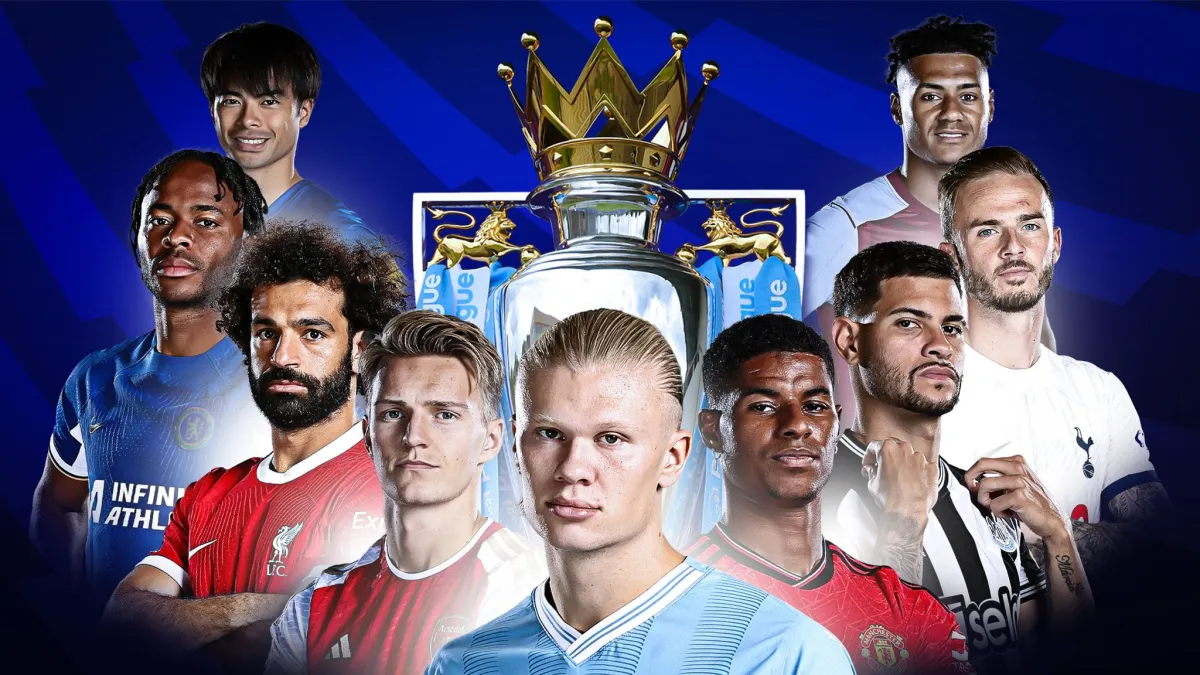 Photo: Premier League, via e0.365dm.com
In the most straightforward version, a player's agent identifies that their client would benefit commercially from inheriting a specific iconic number at the buying club. The number in question may currently be unassigned, held by a fringe squad member, or worn by a player whose contract is about to expire. The agent then structures the wage negotiation in a way that effectively prices in the number — accepting a slightly lower base salary in exchange for a higher signing bonus, a more favorable image rights split, or an enhanced commercial clause that is understood by both parties to reflect, in part, the value of the number itself.
In more complex arrangements, sources describe situations where a current number-holder has been quietly compensated — through a contract amendment, a bonus payment, or a favorable loan arrangement — to relinquish the digit ahead of a high-profile incoming signing. The cost of that compensation is absorbed into the overall transfer budget, rarely itemized separately, and almost never disclosed publicly.
"The number is never the stated reason for anything," one agent told Footie Transfer News, speaking on strict condition of anonymity. "But everyone in the room knows what the number is worth. It just gets absorbed somewhere else in the structure."
The Post-World Cup Spike
Industry sources indicate that number-related commercial considerations became significantly more prominent in transfer negotiations following the 2026 World Cup. The tournament's US, Canadian, and Mexican host cities generated unprecedented levels of replica merchandise sales, with certain squad numbers selling at multiples of the average across participating nations.
 Photo: 2026 World Cup, via img-s-msn-com.akamaized.net
For MLS clubs in particular, the commercial opportunity is acute. A newly signed European star arriving with the same squad number he wore during a memorable World Cup run carries a built-in merchandising narrative that American clubs — increasingly sophisticated in their commercial operations — are extremely reluctant to disrupt. Sources at two MLS clubs confirmed that squad number continuity for high-profile signings was discussed at boardroom level during the 2026 window, with commercial departments providing revenue projections based on number-specific shirt sales.
In one case, sources indicate, the commercial department's number-specific projection was provided to the sporting director before the player's medical was completed — an unusual sequencing that speaks to how seriously the financial dimension of number assignment is now being treated.
The Grey Market Problem
The fundamental issue with number monetisation is that it operates in a regulatory grey area that football's governing bodies have not yet moved to address. FIFA and UEFA regulations govern transfer fees, agent commissions, and contract structures with varying degrees of rigor. Squad number assignment is treated as an internal club matter, subject only to basic league registration rules.
This means that financial arrangements connected to number inheritance — however they are structured — currently exist largely outside the formal regulatory framework. Payments made to existing number-holders to vacate a digit, commercial clauses tied to number-specific merchandise revenue, signing bonuses calibrated to reflect number value: none of these are explicitly prohibited, and none are subject to the same disclosure requirements as headline transfer fees.
For financial fair play regulators, this creates a potential accounting concern. If a portion of a player's total compensation package is effectively a payment for a squad number rather than for athletic services, the classification of that payment has implications for how it is treated under cost control regulations. Sources familiar with UEFA's financial monitoring processes acknowledge that the issue has been raised internally, though no formal investigation or regulatory guidance has yet been issued.
The American Angle
For US-based fans, the squad number question intersects with a broader cultural familiarity that makes the commercial logic particularly legible. American professional sports have long treated jersey numbers as brand assets — retired numbers, number auctions in charity contexts, the premium placed on single-digit numbers in the NFL — so the idea that a football shirt number might carry independent commercial value is not conceptually alien to an American audience.
What is perhaps surprising is that European football, with its deeper and more emotionally charged relationship with squad number tradition, has been slower to formalize this dynamic. The commercialization is happening — sources are clear on that — but it is happening quietly, structured to avoid the kind of public scrutiny that would force clubs and agents to defend a practice that many in the game would find uncomfortable to acknowledge.
What Comes Next
The trajectory, sources suggest, points toward further formalization rather than retreat. As clubs become more sophisticated in their commercial modeling and as agents become more adept at quantifying the brand value their clients bring to a number, the informal arrangements that currently characterize number monetisation are likely to become more explicit — and eventually, more regulated.
Several agents described a future in which squad number rights are formally licensed, with clubs paying a number-specific commercial premium that is transparently disclosed as part of the overall transfer package. Whether football's governing bodies will move to regulate that market before it becomes a significant source of financial distortion remains to be seen.
For now, the number market exists in the shadows of the transfer room — acknowledged by those who operate within it, invisible to those who watch from outside, and growing quietly with every iconic digit that changes hands.
Verdict: The monetisation of squad numbers is not yet a systemic problem, but it is an unregulated one — and in football, unregulated grey markets have a consistent tendency to become expensive ones.