Residency as a Revenue Stream: How a US Green Card Became One of Football's Most Valuable Hidden Assets
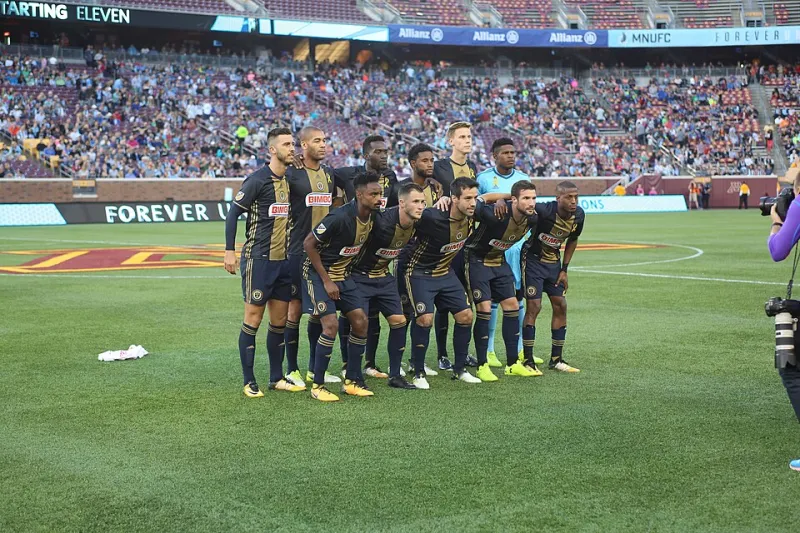
Photo: Andy Witchger, CC BY 2.0, via Wikimedia Commons
In the summer of 2026, a mid-table Bundesliga club quietly paid what sources close to the deal described as a €4 million premium above a player's assessed market value. The reason had nothing to do with goals, assists, or pressing metrics. It had everything to do with a laminated card issued by the United States Citizenship and Immigration Services.
 Photo: United States, via img1.etsystatic.com
The player in question held a valid US green card — permanent residency, pre-cleared work authorization, no consular appointment required. In a post-World Cup transfer market where MLS clubs are moving faster than ever and US immigration backlogs have stretched visa processing timelines to four months or longer, that document was reportedly worth more than his last six months of Bundesliga appearances.
Welcome to the green card gamble — one of the most quietly significant and least discussed variables now shaping transfer valuations across European football.
The Visa Queue Nobody Talks About
For American football fans, the transfer market is usually framed around fees, wages, and tactical fit. What rarely surfaces in the conversation is the extraordinary administrative friction involved in placing a non-US national inside an American professional sports league. MLS clubs, like all US employers, must navigate a federal immigration system that has grown considerably more congested since the 2026 World Cup accelerated the league's global ambitions.
 Photo: 2026 World Cup, via files.prokerala.com
The P-1A visa — the standard route for internationally recognized athletes — requires consular processing that, in several countries, now runs between 90 and 120 days from application to approval. For a club attempting to close a transfer in the final weeks of a window, that timeline is functionally prohibitive. A deal that looks straightforward on paper can collapse entirely when an immigration attorney delivers the processing estimate.
This is the structural problem that green card holders solve before it starts.
"The clubs that are moving quickly in MLS right now cannot afford to lose four months of a player's availability to a visa queue," one senior transfer consultant, speaking on condition of anonymity, told Footie Transfer News. "If you have two players of comparable quality and one of them is already authorized to work in the United States, that is not a tie-breaker. That is a significant commercial advantage."
The Post-World Cup Acceleration Effect
The 2026 World Cup, co-hosted across the United States, Canada, and Mexico, fundamentally altered the perception of MLS as a transfer destination. Attendances, broadcast revenues, and global sponsorship interest surged during the tournament and have not meaningfully retreated. The league's expansion franchises — several of which were fast-tracked into existence partly to service World Cup infrastructure — are now legitimate competitors in the international transfer market, capable of offering designated player contracts that rival lower-tier European wages.
That commercial upgrade has had a direct consequence on how clubs in Europe assess player assets. A player who might once have been viewed as a future MLS retiree is now a potential mid-career transfer target for a league that can genuinely compete for attention and talent. And if that player already holds US residency, the administrative pathway to completing such a move is dramatically shorter.
Sources familiar with multiple 2026 transfer negotiations indicate that at least three confirmed deals this year included explicit reference to immigration status in the fee negotiation. In two cases, the buying club — both based outside the United States — paid above the initially quoted price after the selling club's representatives highlighted the player's green card as a factor likely to attract MLS interest, effectively creating competitive tension where none had previously existed.
Agents Are Already Pricing It In
The agents who identified this dynamic earliest are now building it systematically into their client development strategies. Several prominent representatives operating in the South American market — where a significant proportion of MLS-eligible talent originates — have reportedly begun advising younger clients to pursue US residency applications proactively, even before any concrete MLS interest materializes.
The logic is straightforward: a player who secures a green card at 24, during a successful European spell, enters the back half of their career with a demonstrably wider range of transfer destinations. That optionality has monetary value, and agents are increasingly sophisticated about surfacing it at the negotiating table.
"It used to be that the Beckham clause was the gold standard for building America into a player's future," noted one agent with clients across three European leagues, referencing the legacy contractual mechanism that allowed David Beckham to eventually own an MLS franchise. "Now we are seeing something more granular — players who are not American, have no American heritage, but have taken deliberate steps to make themselves administratively available for the American market. That is a new kind of asset."
 Photo: David Beckham, via s.yimg.com
The Absurdity Underneath the Logic
For American fans, there is something genuinely strange about watching a player's immigration paperwork become a line item in a transfer negotiation conducted in euros between two clubs that may never set foot in the United States. The transfer market has always found ways to commodify the unexpected — squad registration rules, sell-on clauses, image rights — but the green card premium sits in its own peculiar category.
It is, at its core, a market inefficiency generated by bureaucratic friction. The US immigration system was not designed with football transfer windows in mind. The P-1A visa process does not pause for deadline day. And in the gap between those two realities, a secondary market for pre-cleared human capital has quietly taken shape.
What This Means Going Forward
For MLS clubs, the practical implication is significant: investing in immigration infrastructure — retaining specialist legal counsel, identifying green card holders proactively in scouting databases — is now a legitimate competitive advantage. Clubs that can close transfers without a four-month visa delay are clubs that can act decisively when rivals cannot.
For European clubs holding players with US residency, the message is equally clear: that status has measurable resale value and should be treated accordingly during contract negotiations and transfer discussions.
And for the players themselves, a document that once represented little more than administrative convenience has become something rather more valuable — a financial instrument, embedded in their personal profile, quietly inflating their market price every time an MLS club opens its checkbook.
Verdict: The green card premium is not a bubble — it is a rational market response to a genuine structural bottleneck, and clubs that fail to account for immigration status in their transfer valuations are leaving money on the table in both directions.