The Interpreter on the Bench: How Real-Time Translation Technology Is Becoming Football's Most Underrated Transfer Tool

Photo: Hameltion, CC BY-SA 4.0, via Wikimedia Commons
The Interpreter on the Bench: How Real-Time Translation Technology Is Becoming Football's Most Underrated Transfer Tool
In the summer of 2026, Atlanta United's technical director was on the verge of losing a $12 million deal for a promising Brazilian midfielder. The player's agent spoke only Portuguese, the club's coaching staff communicated in English and Spanish, and three weeks of negotiations had devolved into a frustrating game of telephone. Then someone suggested trying the new AI translation earpieces that had been gathering dust in the equipment room.
 Photo: Atlanta United, via colorings.io
Within 48 hours, the deal was done.
This scenario is playing out across American soccer as real-time translation technology quietly revolutionizes how clubs communicate with international talent. While European giants still rely on human interpreters and hope for the best, MLS franchises are embracing AI-powered solutions that eliminate the language barriers that have historically torpedoed promising transfers before they could get off the ground.
The Technology Revolution
The breakthrough came from an unexpected source: the gaming industry. Companies like Timekettle and Waverly Labs, originally focused on helping esports teams communicate across language barriers, pivoted to sports when they realized the market potential. Their latest devices can translate 40+ languages in real-time with 95% accuracy, a dramatic improvement from the 70% accuracy rates that made early versions unreliable.
"We tested everything on the market," explains Maria Santos, Atlanta United's director of player development. "The difference between a player understanding 70% of what the coach is saying versus 95% is massive. It's the difference between confusion and clarity, between a failed integration and a successful one."
The technology works through a combination of bone-conduction earpieces and smartphone apps that process speech in milliseconds. Players can hear their coach's instructions in their native language while speaking responses that are instantly translated back. For clubs, it means they can evaluate talent without worrying about communication breakdowns during crucial trial periods.
MLS Leading the Charge
American clubs have embraced this technology faster than their European counterparts, largely due to MLS's unique multilingual challenges. Cities like Los Angeles, Miami, and New York regularly deal with players who speak Spanish, Portuguese, French, and English within the same squad. Traditional interpreter services are expensive, often unavailable on short notice, and create delays that can derail time-sensitive negotiations.
"European clubs often have the luxury of signing players from the same region who speak similar languages," notes Dr. James Rodriguez, a sports technology consultant who has worked with six MLS franchises. "American clubs are trying to build chemistry between a Ghanaian defender, a Colombian striker, and a Swedish midfielder. The technology levels the playing field."
Los Angeles FC has been particularly aggressive in adoption, equipping their entire coaching staff with translation devices during the 2026 season. The investment paid off when they successfully integrated three South American signings who had struggled at previous European clubs partly due to communication issues.
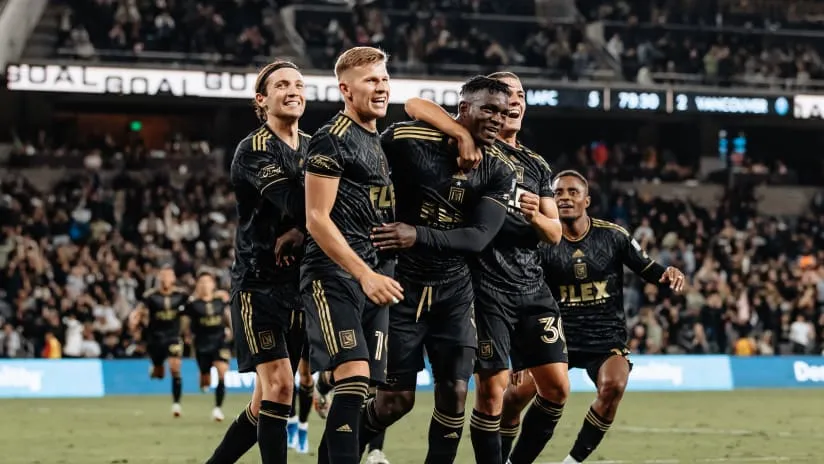 Photo: Los Angeles FC, via img.vavel.com
Breaking Down Transfer Barriers
The impact extends beyond the field to the boardroom. Transfer negotiations that previously required flying interpreters across continents can now happen via video call with real-time translation. Agents report that deals are closing 30% faster when language barriers are eliminated from the equation.
"I've seen too many good players fail because they couldn't communicate their needs to medical staff, couldn't understand tactical instructions, or felt isolated in the locker room," says Carlos Mendez, an agent who represents players across three continents. "This technology doesn't just help with contracts—it helps with integration, which is where most transfers actually succeed or fail."
The technology has also enabled American clubs to scout talent from previously inaccessible markets. Scottish Premiership players who might have been overlooked due to accent barriers, Portuguese league standouts whose agents don't speak English, and Scandinavian prospects who are more comfortable in their native languages are suddenly viable targets for MLS clubs equipped with translation technology.
European Resistance
Interestingly, European clubs have been slower to adopt these solutions, partly due to cultural resistance and partly due to established infrastructure. Premier League clubs, for instance, have built extensive translator networks over decades and view the technology as unnecessary overhead.
"There's a certain pride in the traditional way of doing things," explains Dr. Rodriguez. "European clubs often see the language barrier as part of the test—if a player can't adapt to English or Spanish or Italian, maybe they're not mentally strong enough for the highest level."
This resistance creates an opportunity for American clubs. Players who might struggle with the language requirements at Manchester City or Barcelona can find a more welcoming environment in MLS, where technology bridges the gap during their adaptation period.
 Photo: Manchester City, via tripsavvy.com
The Numbers Game
Early data suggests the technology is delivering measurable results. Clubs using real-time translation report 23% faster integration times for international signings and 18% lower failure rates for players in their first season. The financial impact is significant—a failed $8 million signing that doesn't work out due to communication issues represents a much larger loss than the $50,000 annual cost of equipping a coaching staff with translation technology.
Looking Forward
As the technology improves, expect to see more sophisticated applications. Next-generation devices will include tactical diagram translation, emotional tone recognition, and even cultural context suggestions. Some companies are developing systems that can translate not just words but soccer-specific jargon and regional tactical concepts.
The real test will come during the 2026 World Cup, when American clubs will have unprecedented access to international talent. Teams that have invested in translation technology may find themselves with a significant advantage in post-tournament negotiations.
For an industry that has always prized communication and chemistry, removing language barriers through technology isn't just convenient—it's revolutionary. American clubs that embrace these tools today may find themselves ahead of European rivals who are still stuck in the past, one conversation at a time.